

The global sports industry is currently witnessing a paradigm shift that transcends the traditional boundaries of seasonal competition, creating communities outside of their normal specialty
Case in point PSG.
The football club is building a run club.
This evolution represents a departure from the spectatoritis of the twentieth century, a term used to describe passive consumption, toward a vertically integrated lifestyle model where the sports club functions as a permanent, year-round cultural anchor.
The Black Book will also take a look at other models in Australia, not so much built on digital connection, but using infrastructure to connect and grow the community.
We’ve seen this with big clubs and sports pulling in cultural influences, fashion and merchandise – now we are seeing the first ever positioning as a global lifestyle brand.
At the forefront of this movement is Paris Saint-Germain (PSG), which has effectively repositioned itself from a Parisian football team thanks to the launch of “PSG Running” and the “La Maison” experiential residences, the club has created a sophisticated ecosystem that combines physical activity, luxury venues, and curated apparel to maintain a constant presence in the consumer’s daily life.
This strategic evolution is not merely a marketing exercise but a fundamental restructuring of the relationship between a professional sports organization and its community.
It is a new blueprint for fan engagement.
Furthermore, the Australian landscape provides a contrasting yet complementary model of functional diversification, where clubs like Richmond and Collingwood utilize facility management and social infrastructure to achieve year-round relevance.
A similar, but different, model is happening in Italy’s Lake Como…

The PSG Model: From the Pitch to the Experiential Laboratory
The strategic core of Paris Saint-Germain’s brand expansion is rooted in the concept of Parisian Savoir-Faire, a cultural asset that grants the club permission to inhabit the worlds of fashion, art, and high-end wellness.
The Ici C’est Paris slogan, once a local football chant, has been re-engineered into a symbol of a broader cultural identity that resonates globally.
PSG Running: A Global Infrastructure for Mass Participation
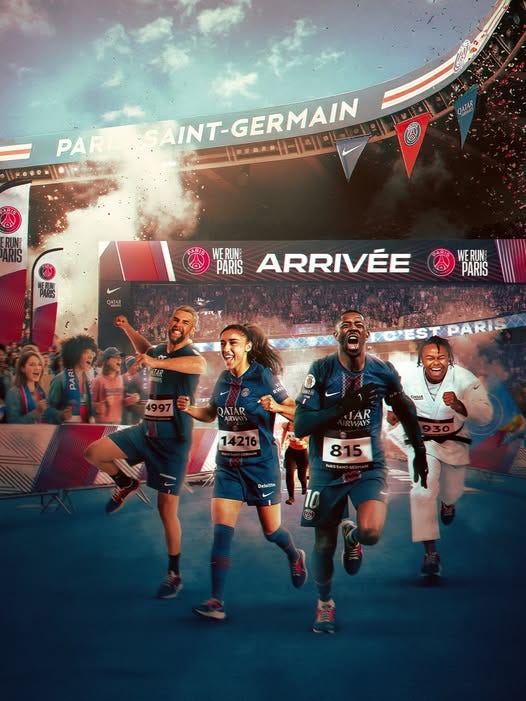
Launched in February 2026, PSG Running represents the club’s most aggressive move into the participatory sports market.
Unlike many sports initiatives that are limited to promotional clinics, PSG Running is built as a permanent infrastructure designed to unify a community of runners that extends far beyond the traditional football fanbase.
The initiative is strategically aligned with Nike and features four-time Olympic champion Sir Mo Farah as its global ambassador.
The operational structure of PSG Running is designed to address the needs of an increasingly active global Rouge & Bleu community.
This ambition is manifested through the return of “We Run Paris,” a flagship 10K race that terminates at the iconic Parc des Princes stadium, drawing more than 10,000 participants in its debut.
Beyond this annual event, the club has deployed international Run Clubs, with the inaugural chapter starting in London in early 2026.
These clubs are supported by a digital ecosystem through the PSG Run Club on Strava, allowing for year-round tracking, digital challenges, and data-driven community building.
The inclusion of Sir Mo Farah is a critical component of the program’s ambition to inspire the Next Generation - he is tasked with rolling out educational and instructional content that supports runners of all levels, from beginners to elite athletes.
This educational aspect is vital for brand loyalty, as it positions PSG as a provider of utility and expertise in the runner’s personal journey toward self-improvement.
La Maison PSG: The Architecture of Brand Transcendence
While PSG Running addresses the physical dimension of the brand, La Maison (The House) serves as the lifestyle anchor.
The concept debuted as a week-long residency in a traditional four-story townhouse in London’s Cavendish Square, serving as an experiential laboratory for the PSG universe.
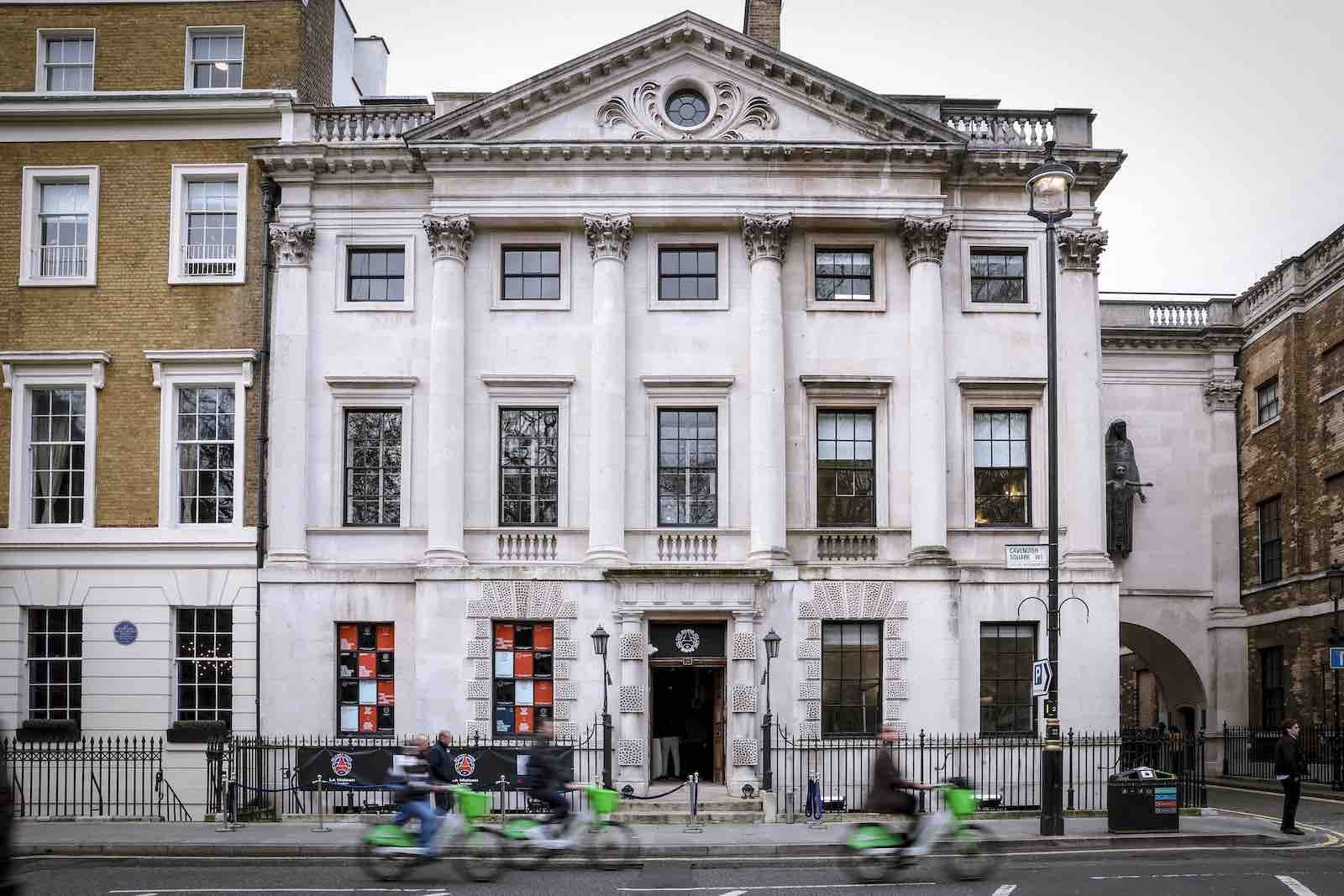
Each floor was meticulously designed to offer a different insight into the brand identity, effectively creating a physical manifestation of the club’s lifestyle pillar.
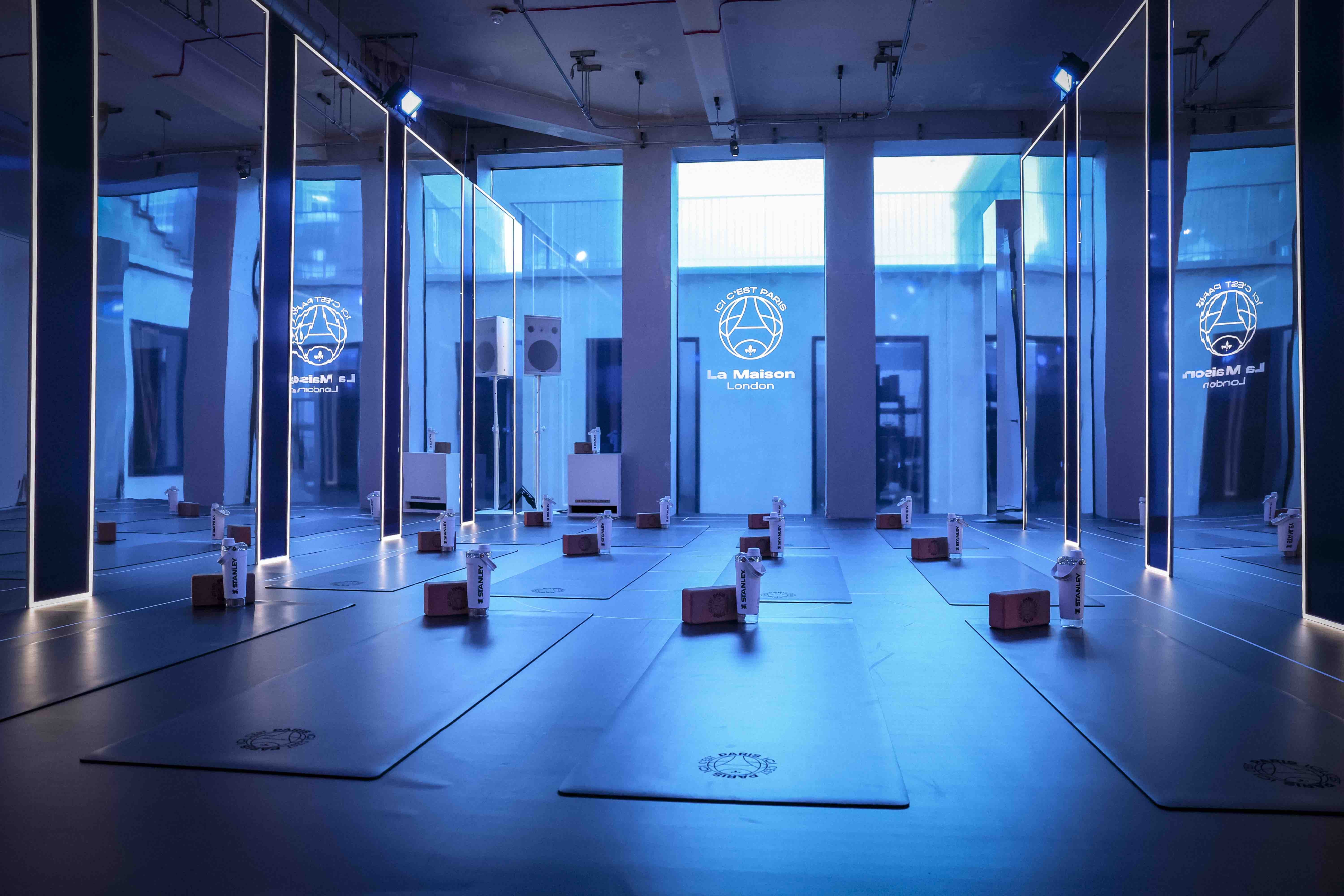
The ground floor, designated as the Training Room, reinterpreted pre-game rituals through movement and recovery, hosting everything from high-intensity circuits to kids’ yoga.
The first floor transitioned into Lifestyle and Commerce, featuring the Ici C’est Paris Cafe and a sneaker lab that offered exclusive collaborations and limited-edition drops, such as the Air Jordan 6 Metallic Silver.
The second floor, The Lounge, was dedicated to creative dialogue between Paris and London, hosting DJs, musicians, and workshops on the urban cultures that define both cities.
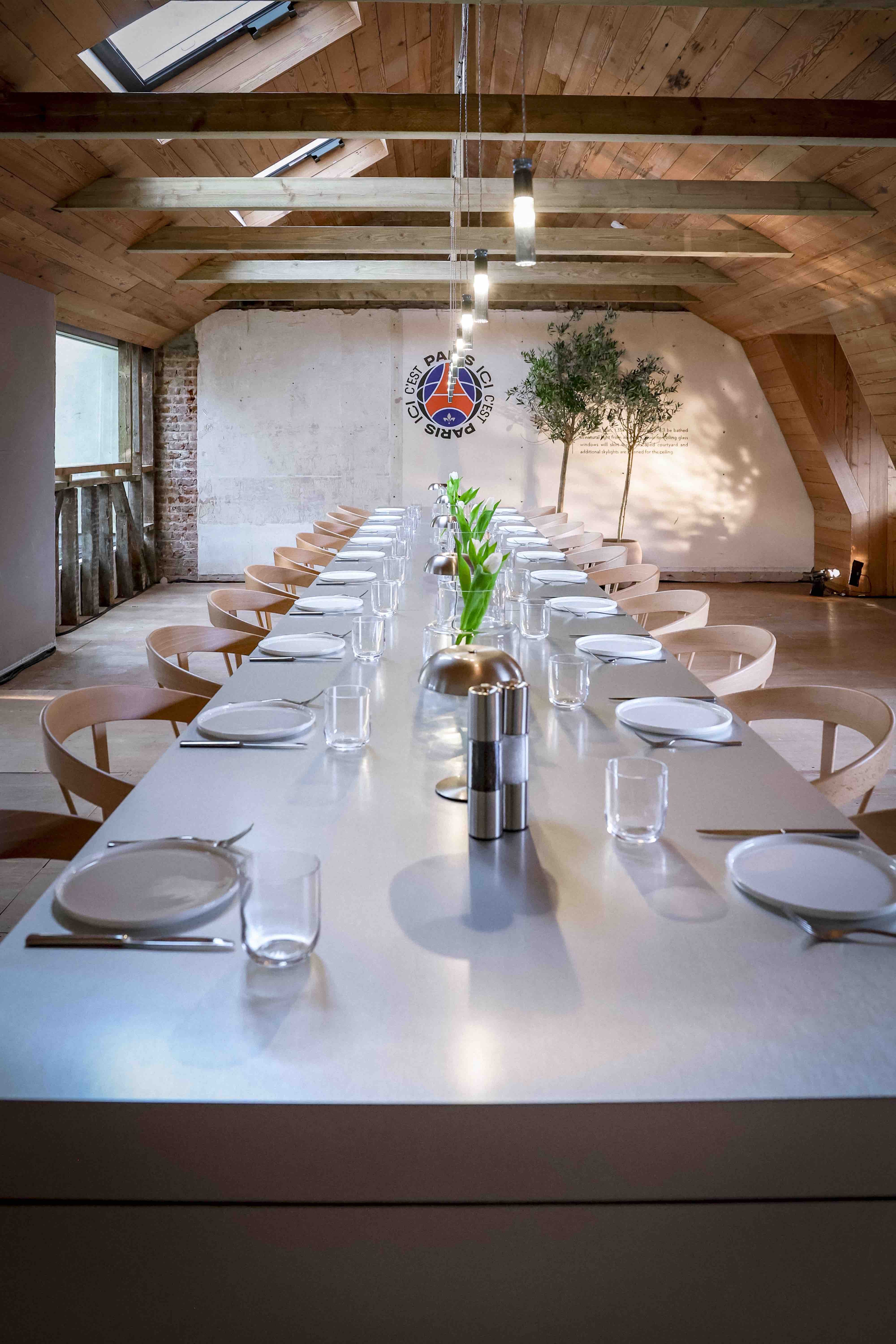
Finally, the third floor offered an exclusive, registration-only private dining experience, highlighting the art de vivre with menus created by top chefs from both capitals.
Comparative Analysis: Global Sub-Brands and Lifestyle Pivots
To fully appreciate the PSG model, it is necessary to compare it with other global initiatives that attempt to integrate lifestyle, fashion, and physical activity. While PSG offers a holistic hub approach, other clubs and leagues have focused on specific niches within the lifestyle spectrum.
The High-Fashion Aesthetic: Milan and Madrid
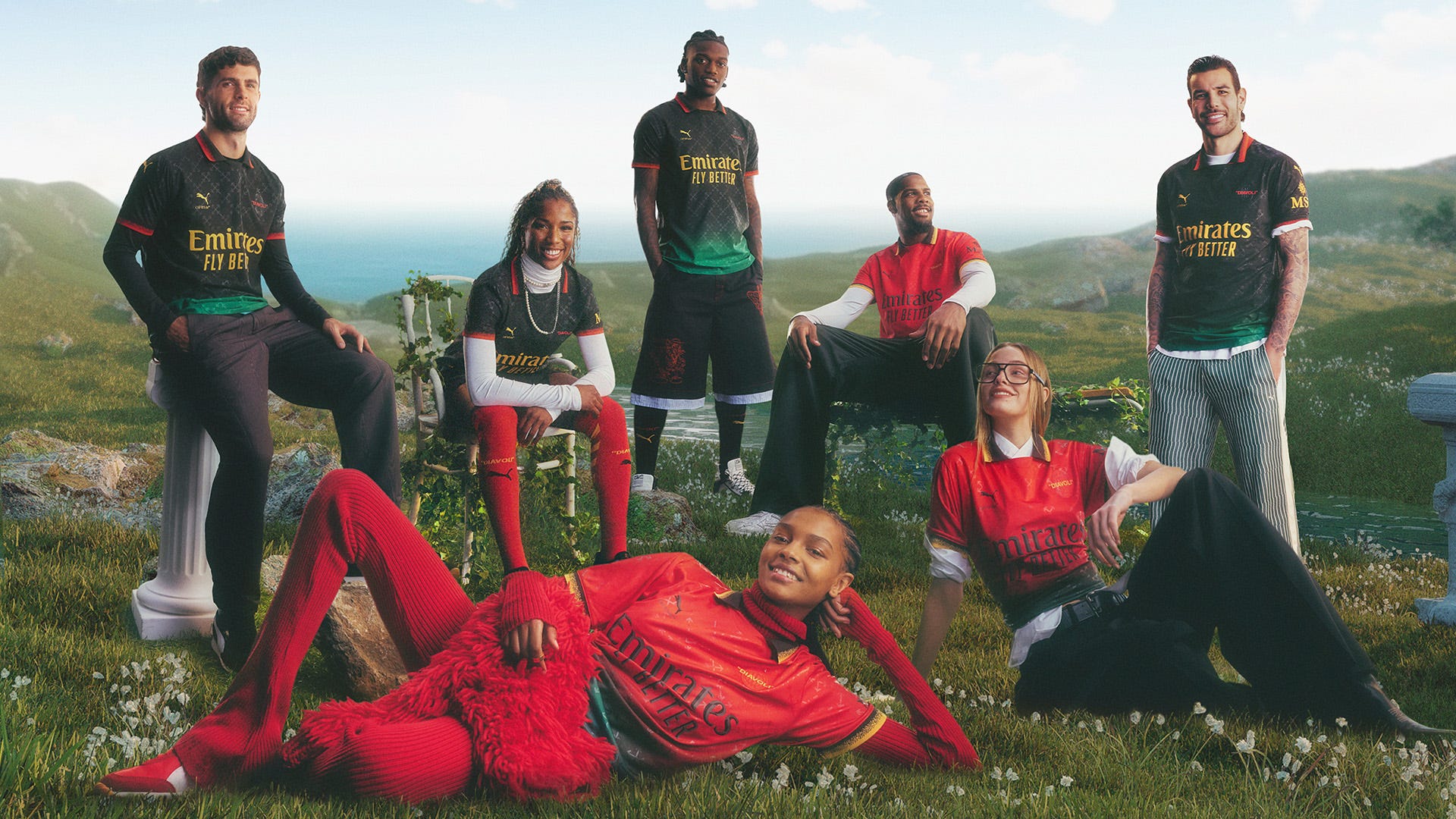
The collaborations of AC Milan x Off-White and Real Madrid x Y-3 represent the aesthetic pivot in professional sports.
These initiatives focus on cultural credibility and fashion authority over mass physical participation.
The AC Milan x Off-White partnership is a testament to football’s ability to influence culture and identity on a global scale, often manifesting in the tunnel fits worn by players as they arrive at stadiums.
These moments are curated to resonate with younger fans who view athletes as cultural icons rather than just players.
Real Madrid’s partnership with Y-3 (Yohji Yamamoto) focuses on elevated elegance and luxury performance, using archival motifs and Parisian couture inspiration to create a premium sportswear wardrobe.
These models use merch as a marker of belonging, where wearing the club’s colours signals a connection to shared values and aesthetic tastes rather than a commitment to a participatory program.
Wellness and Social Responsibility: NBA Fit
In contrast to the luxury-focused European models, the NBA Fit program represents a wellness and advocacy model. Launched as the league’s comprehensive health and wellness platform, NBA Fit encourages fans to Be Active, Eat Healthy, and Play Together.
The program has historically relied on strategic partnerships with apparel giants like Under Armour, utilizing digital platforms like the NBA Fit mobile application to deliver training videos from NBA and WNBA players.
The evolution, or struggles, of NBA Fit in 2026 shows a transition toward more personal athlete-led brands.
The separation of the Curry Brand from Under Armour in early 2026 is a significant indicator of this trend.
Following a decade-long partnership, Stephen Curry is gaining independence to chart his own course with Curry Brand, which will continue to focus on community investments in youth sports while operating as its own retail entity.
This move allows for a more focused niche engagement that mirrors the PSG model’s attempt to build independent verticals.
The Media-First Strategy and the Gold Standard: Red Bull
Red Bull provides perhaps the most evolved example of a sports sub-brand that has become the primary product.
Red Bull does not simply sponsor events; it owns the teams, the media production house (Red Bull Media House), and the events themselves.
By investing heavily in owned media channels like Red Bull TV and The Red Bulletin magazine, the brand positions itself as a lifestyle synonym for adrenaline and peak performance.
Red Bull’s ownership of multiple clubs (e.g., RB Salzburg, RB Leipzig) and extreme sports series creates a closed-loop ecosystem where the brand controls the storytelling from beginning to end.
This content-first strategy is a direct precursor to PSG’s Ici C’est Paris Music Lab and the La Maison residence, which both aim to own the cultural narrative surrounding the club.
Investigating the Australian Context: Functional Diversification and Community Hubs
While European and North American models often focus on global identity and “luxury, the Australian sports landscape has pioneered a model of functional utility and social infrastructure.
Major clubs in the AFL and NRL have successfully created year-round engagement by diversifying into facility management, vocational education, and holistic community services.
While PSG’s model is asset lite, the integrated and successful models across Australian sport are not.
Richmond Football Club and the Aligned Leisure Model
Richmond Football Club is currently recognized as the most diversified sporting club in Australia.
This status is largely driven by its fully owned subsidiary, Aligned Leisure, which was established in 2015 as a vehicle to manage community health, fitness, and leisure assets.
By 2026, Aligned Leisure had grown to manage over 51 facilities across Victoria and New South Wales, including gyms, aquatic centres, and even regional theaters.
This model represents a “de-seasonalisation” of the football club’s business plan.
Unlike the AFL season, which runs from March to September, Aligned Leisure operates 365 days a year, providing a consistent revenue stream and community presence.
A key insight from the Richmond model is the strategic use of brand separation.
While Aligned Leisure is managed by club employees and uses the club’s human resources and marketing expertise, it operates under its own brand to remain inclusive to community members who may support rival AFL teams.
Beyond leisure management, the Richmond Institute functions as the club’s educational arm, producing nearly 1,000 dual diploma graduates in sport and business.
This creates a powerful engagement loop where fans and community members are trained within the club’s environment and then transitioned into the sports industry workforce. This vocational engagement is a uniquely Australian contribution to the lifestyle brand model.
It truly taps into the better people holistic elements beautifully.
Collingwood Football Club and the AIA Centre
Collingwood Football Club has adopted a Holistic Hub strategy cantered on its administrative and training headquarters, the AIA Centre (formerly known as the Holden Centre or “The Glasshouse”).
This heritage-listed venue, originally built for the 1956 Olympic Games, has been redeveloped into a $15 million multidisciplinary hub for sports performance, development, and community research.
Collingwood’s model is distinguished by its deep integration of social justice and community health services.
Through its Nest for All pillar, the club operates the Magpie Nest Cafe, which serves over 104,000 complimentary meals annually to Melbourne’s disadvantaged, and a housing program that supports over 120 individuals.
The club also hosts teams in the Victorian Reclink AFL league, providing a cultural safe space for individuals facing homelessness or mental health challenges.
The AIA Centre functions as a Shared Value platform, where the naming rights partner (AIA Australia) uses the club’s facilities to promote its own wellness programs (e.g., AIA Vitality) to the club’s massive member base.
Regional and Grassroots Participation Programs
Beyond the elite AFL/NRL clubs, the Australian model is characterized by strong government-backed school and regional initiatives.
Programs like Coles Healthy Kicks combine foundational football fitness with nutrition and mindfulness, reaching primary school children through a four-quarter model.
Similarly, the In League In Harmony program by the NRL has engaged over 10,000 participants across Australia, using the language of rugby league to address social issues like racism and gender inequality.
Regional Australia presents a significant opportunity for brands seeking authentic grassroots connections.
Research indicates that 85% of regional residents actively participate in community sports, and 81% feel more positive toward brands that sponsor their local clubs.
Strategic Framework for Implementation: Building the Lifestyle Ecosystem
For sports clubs of all sizes, the transition to a year-round lifestyle or participatory sub-brand requires a structured approach that balances financial sustainability with community trust.
The following framework provides a roadmap for implementation based on the best practices observed in the PSG and Australian models.
Phase 1: Strategic Alignment and Brand Permission
Before launching participatory programs, a club must conduct a Brand Permission Audit to understand where its authority extends beyond the field.
Define the “Why”: Establish a mission statement that articulates the club’s purpose in the community (e.g., “Connecting to Thrive and Win”).
Assess Audience Drivers: Utilize tools like the Swinburne MEMSAT (Membership Satisfaction and Retention) model. Research indicates that service standards (e.g., facility quality, communications) are much stronger factors in member retention than on-field performance.
Identify Strategic Partners: Look for partners in the health, fashion, or education sectors whose goals align with the club’s lifestyle ambitions (e.g., Nike, AIA, local councils).
Phase 2: Building the Participatory Foundation
Small clubs can begin by creating low-barrier physical activity programs that leverage their existing identity.
Launch Participatory Sub-Brands: Create specific divisions like Run Clubs or Walking Clubs that meet regularly at the club’s facilities. These are physical events that can be supported by digital infrastructure/communications.
Implement Gamification: Use white-label apps (like the FanFit/FitBears model) to track walking and running activity. Evidence shows that fandom-based gamification can increase daily activity levels by over 500 steps for up to nine months.
Establish a Digital Presence: Create a dedicated club app or Strava group to maintain engagement during the off-season with “Where Are They Now?” athlete content and training tips. Even a humble Whatsapp group.
Phase 3: Place-Making and Functional Diversification
Scaling the initiative requires a physical venue that serves as a permanent anchor for the brand.
The Multi-Use Hub: Transition training centres into community hubs featuring public-access gyms, cafes, or co-working spaces (e.g., AIA Centre, La Maison).
Revenue Diversification: Explore contracts for managing municipal facilities or launching vocational education courses. The Aligned Leisure model shows that this can generate significant revenue that is decoupled from AFL distributions.
Experiential Events: Move beyond clinics to immersive cultural events. This could include city-wide treasure hunts, music workshops, or themed dining experiences.
Phase 4: Sustained Engagement and Measurement
To ensure long-term viability, clubs must measure their Social Return on Investment (SROI) alongside traditional financial metrics.
Personalization at Scale: Use data analytics (e.g., Bluprintx/Salesforce) to create a 360-degree fan view, allowing for personal content journeys based on how fans interact with the club’s participatory and lifestyle offerings.
Establish Fan Councils: Create feedback loops where fans can weigh in on program offerings, merchandise, and facility policies.
Monitor Non-Sporting KPIs: Track metrics such as annual facility visitation, community health outcomes, volunteer hours, and vocational graduation rates.
Behavioural Economics and the Future of Sports Fandom
The success of participatory models like PSG Running is deeply rooted in behavioural economics.
By creating incentives for daily activity, such as digital badges, physical prizes, or exclusive sneaker lab access, clubs nudge fans toward adopting healthier lifestyles that are inextricably linked to the brand.
The fandom circle in the digital era is characterized by a transition from individual consumption to collective emotional aggregation.
When a fan joins a PSG Run Club or attends a music workshop at La Maison, they are no longer just a spectator; they are an active contributor to the club’s culture.
This co-production of the brand’s identity creates a level of attitudinal loyalty that on-field results alone cannot achieve.
Insights into the Strategic Evolution of Sports Brands
The Super-Sub-Brand as an Independent Entity: The separation of the Curry Brand from Under Armour and the distinct identity of Aligned Leisure suggest that sub-brands are becoming powerful enough to operate independently of their parent orgs. This allows them to reach niche audiences that the broader parent brand might alienate.
Facility Management as the New TV Rights: In the Australian context, managing the physical infrastructure of community health (pools, gyms) is becoming as crucial to financial stability as traditional media revenue. This creates a moat around the club’s community presence that digital-only brands cannot replicate.
The Rise of the Vocational Fan: By offering dual diplomas and fitness certifications, clubs are turning fans into professional ambassadors. This creates a workforce of supporters who are professionally invested in the success of the club’s community initiatives.
Cultural Savoir-Faire vs. Local Utility: Global brands like PSG transcend sports through culture (fashion, dining), while local brands like Richmond transcend through utility (health, education). Both pathways successfully de-seasonalize the brand and move the club into the permanent habits of the consumer.
Conclusions and Recommendations
The strategic analysis of PSG Running, La Maison, and the broader global and Australian contexts reveals that the integrated sports lifestyle hub is the future of sustainable sports business.
PSG has provided an evolved blueprint for global identity-based expansion, leveraging the cultural prestige of Paris to build an ecosystem of participation and luxury.
Meanwhile, Australian clubs have demonstrated the power of utility-based diversification, turning seasonal football teams into year-round social infrastructure providers.
For clubs of all sizes, the path forward involves three key actions:
De-seasonalize the Brand: Invest in low-barrier participatory programs (running, walking, yoga) that integrate the club into the fan’s daily routine.
Physicalize the Experience: Repurpose or redevelop administrative and training facilities into multi-use community hubs that provide value outside of match days.
Diversify Revenue through Purpose: Identify areas where the club’s unique expertise (coaching, facility management, performance science) can solve community problems, such as youth health or vocational unemployment.
By moving from a transactional relationship based on ticket sales to a relational model based on shared participation, sports organizations can ensure their long-term relevance in an increasingly fragmented attention economy.
The integrated sports lifestyle hub is not just an engagement strategy; it is a fundamental redefinition of the sports club as a primary pillar of community health and culture.